

Season of Change

What follows is a transcript of Guest Speaker Sandi Mull's message from our Sunday morning gathering. We share these messages on our blog for those who appreciate the opportunity to read the sermon again—whether for deeper reflection, personal study, or a quieter moment of prayer and introspection. As you read, we invite you to linger with the words, notice what resonates, and remain open to how God may be speaking to you through them.
by Sandi Mull
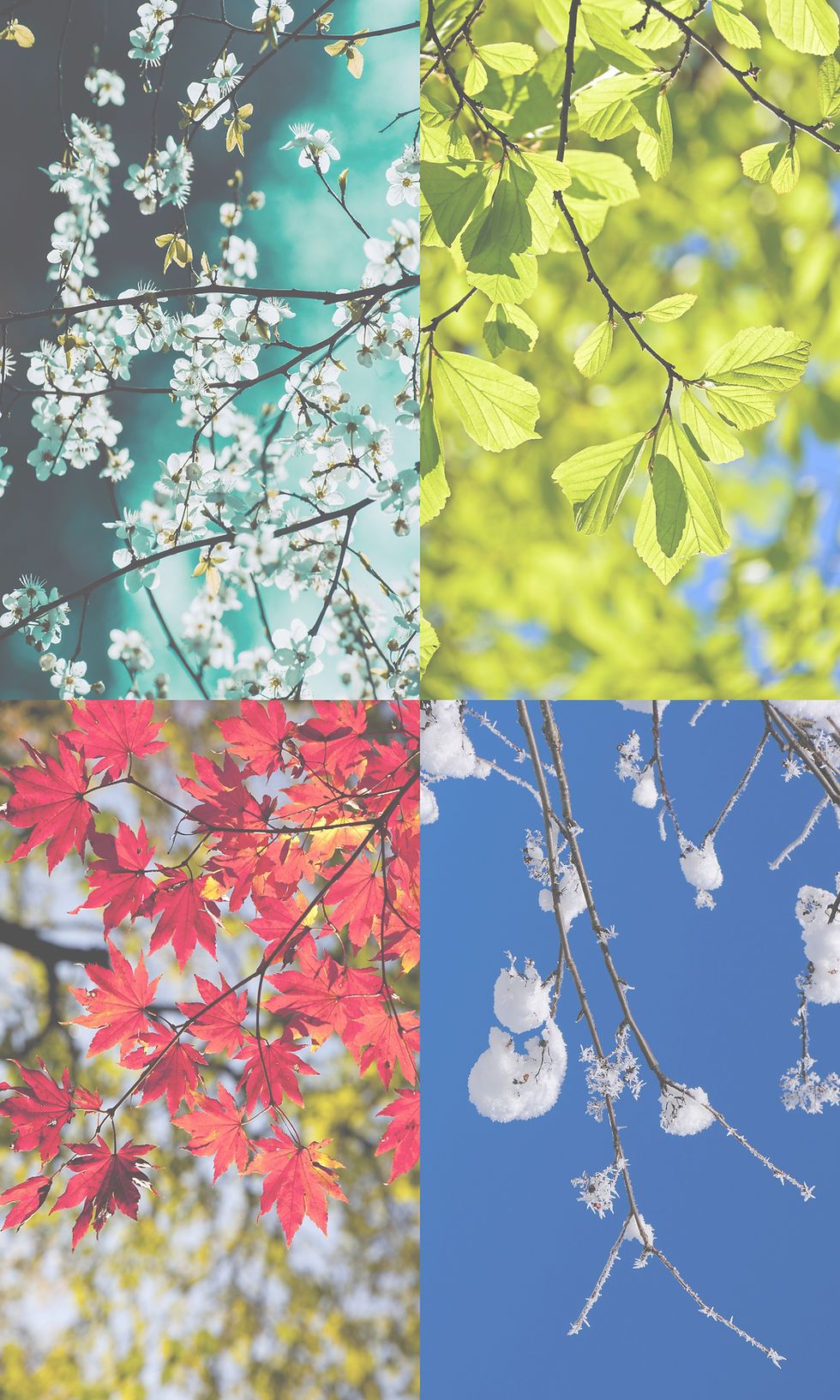
It is a season for us, a season of transitions, and the scripture that came to mind for me was Ecclesiastes 3, 1 through 8. Now Ecclesiastes can be a little difficult to understand. It sort of wanders around, rambles, repeats itself, just like life does sometimes, and some people have described it as a wild goose chase without a goose. Now I don't know about that, but anyway it can be hard to understand because it does ramble some, and the part that we're going to be talking about talks about all the things that occur in life, that occur at maybe certain times, maybe they're planned, maybe they're not.
So I will be reading Ecclesiastes 3, 1 through 8. For everything there is a season and a time for every matter under the heaven, a time to be born and a time to die, a time to plant and a time to pluck up what is planted, a time to kill and a time to heal, a time to break down and a time to build up, a time to weep and a time to laugh, a time to mourn and a time to dance, a time to cast away stones and a time to gather stones together, a time to embrace and a time to refrain from embracing, a time to seek and a time to lose, a time to keep and a time to cast away, a time to tear down and a time to sew, a time to keep silent and a time to speak, a time to love and a time to hate, a time for war and a time for peace. Now I know many people and myself included, myself included, sometimes some of those words, a time to hate, a time for war, but I think the author is saying, you know, that's life. It's not saying that's something we should purpose to do, but that's life.
Now in thinking about transitions and times of life for people, I couldn't help but remember something I read by a man who, I read it every once in a while, he's 87 years old and he has been a writer, a poet, various things, and he was going to his 65th college reunion. He had graduated in 1961. Now I'm going to my 65th in October, but that's for high school, and as many small colleges do, they had two classes having their reunion and the other class was the class of 2021, so quite a different group, and he was talking to the group and he said, you know, there's three different groups, three different age groups, and I want especially you that graduated in 21 to hear this.
There's the youth, and there's the middle age, and then there's the you look great group. Now what I'd like for you to do is look at a couple of people, won't be too hard to find that group, and tell them you look great. Well, and you look great out there too, so we're, many of us are in that you look great group.
Sometimes when there's a transition, people take different paths, or churches might take different paths. Sometimes they discuss it, and that's good if we don't discuss it to death and go no further. Sometimes people are fearful of even mentioning it, and they're silent.
Sometimes people keep saying, well if we could just get back to the way things used to be, we'd be okay, and I've heard that, not necessarily here, but I've heard that over the years. And then there's some people that say maybe it's time to try something a little unexpected. Now my example of the unexpected may not be quite, it may be a little more impulsive than what the church needs to do, but I thought I'd throw it out there to you.
On Memorial Weekend, I went to Wichita with two friends to visit my, what, who I call my crazy aunt, my crazy niece, and she calls me her crazy aunt in Wichita. And I took, and so we had one middle-aged person and three you look great persons together celebrating. And so we were walking around doing some things, and she ran into a, where there was a carousel, and a friend of hers was running it.
And her, and the first thing I thought of when, when I saw it, it's like, I wonder if we can get on that and ride it. And so her friend said, you know, if you want to, if your friends want to ride, I can give them a free ride. So we got on, we rode the merry-go-round, had a good time.
Some of you, a few of you have seen the Facebook picture that I posted. And, but I didn't get the picture that I should have, or the video. You know, our feet are a little bit bigger than the ones that were planned for the stirrups of those, those horses.
And this one member of our group had a little thicker soles on. So she, on getting off, she brought her leg over, but the foot that was in the stirrup was stuck. So she was hanging there, holding onto the pole with her leg dangling.
And my niece, Lisa, went over to help her. And I could have gotten a really good video then, but I missed it. I didn't even think about it.
But, I mean, there was no harm done. Lisa got her out of her predicament, and we went on, having had a good time, and something we can remember. Now, in the church, we might not be ready to try something, you know, quite as, as I say, impulsive.
But there are things we can do. One of the things I noticed last week is that people were standing around and really enjoying talking to each other. Now, we do that every week, but it just, maybe it was just me observing.
I felt like it was happening a little bit more last week than, than it had. And maybe, and that's a good thing. But we also need to think about, you know, how can we bring more people into our discussion, into interacting after church or at some other point.
Sometimes people, some people sort of shy away. Sometimes, of course, some, sometimes someone has something to do afterwards and all. But we might think about that.
And think about other things we might do. And I, and I know that sometimes, as small as we are, and in our exhausting 24-7 world, we get really tired. And we're in that age group that we don't have the same energy we had.
But I read something from, this was a young man, but it could work for any church. He mentioned the fact, and he's in a church that has all different groups of people, ages. And he said, one of the things you need to know is that your website, and maybe we could say your Facebook page, is your front door.
That's the first place people will go to, if they don't know anything about your church, to think about whether they think they might be interested in coming. Now, probably most of us don't think of that as the first thing we would do. I sometimes do that with organizations that I'm not familiar with.
But I've never thought of doing that as the first thing with a, with a church. But he says, yeah, that's what they're going to do. And one of the things he said, if these are people that don't, haven't been to church in a long time, or don't understand church jargon, they need an explanation in non-church jargon of what we do and how we do it.
And, and he said, you know, some things, if they come here and don't have a clue, they can even, this particular young man was Episcopal, but he said, some of the things we do can seem really weird to them. And I was thinking about the time that I sat next to a young man, it was probably at least a year ago, maybe a little longer. And as it turned out, he had never ever been to a church service.
And so he was asking me, what does the word invocation mean? What does doxology mean? What does, you know, and I don't know what all the things and we had a few minutes before the service started, and I gave him some definitions. And I said, you know, if, if there's anything else, let me know. But there can be people that come that have never been in church.
And do we help them help bridge that gap? And then the website also. And then this young man said, the next thing they will do before they come in person, they will join you in streaming services for several weeks, some of maybe several months to before they decide if they're going to come in person. And, you know, I don't know what, how I need to sometime listen to our, our streaming service.
I haven't listened to it. But that that's another thing that that we might consider. He also gave some things that I hadn't thought about for how we can welcome people that might be a little different than what we've done in the past, not saying, he wasn't trying to say anything that what we have been doing is wrong is just that maybe we need to look at it in a little different way at times.
We need everybody's gifts, all of the gifts out there, all of the wisdom out there to help us through this time. I know that we have limits. Speaking of limits, the size of my print is 20.
It would have been 12 a couple years ago. So, you know, I, you all know that I have limitations. Anyway, we have we have limitations, and we need to work within them.
There's a writer that I hadn't heard of for a long time. Her name is Phyllis Tickle. She was one of the early writers about some of the changes that were happening in society that were affecting the churches.
And one of the things she said is that maybe we need a great rummage sale. Now, she wasn't talking about just getting rid of stuff, and we may have stuff to get rid of, too. But she was talking about baggage, what kind of baggage we might be carrying into the future that might not be helpful.
And I have no list of what that baggage is or what that stuff is. I'm just throwing out some ideas. And she said, we can take what really is useful, what we really need into the future.
But if we try to carry everything, then we'll be loaded down, and we won't be able to reach out to younger people. You can remember how Jesus, as he taught people, he sometimes snuck away and went to the wilderness. His disciples would say, we were looking for you.
Where were you? Well, maybe sometimes we need to sneak away to the wilderness, too. Our wilderness won't be like his was, where he went. Actually, the wilderness in that area is almost, it's almost semi-desert.
It's not like we might picture a lot of trees, but it's very barren. It has a beauty all of its own. But people used to go out to the wilderness to find silence.
And in this day of 24-7 news and noise and chaos that we hear about, we all need some time to rest in the silence of God and listen for that call for what it comes next. Sometimes we need some silence to heal. And our wilderness may be our deck.
It may be a special room in our house. It could be going outside someplace other than that. And I have to tell you, I spent a little time in the wilderness as I was praying about this sermon.
And the word that kept coming to me as part of the transition is hope. Now, hope is not the same as optimism. And we can have hope and still be sad, frustrated, and angry sometimes.
But we're taking the long view. When we have hope, we're taking the long, we're not saying what's going to happen in the next three months. Sometimes we would like that to change radically in the next three months.
But we're just saying, I have hope that God is in this and that he is working through it in some way. And it takes discipline. And so what I'd like to share with you in closing is that I talked to, I just sent a message out every once in a while, I do this and say, what do you think? What keeps you hopeful? What do you have that brings hope to you? And so this is a combination of some of my thoughts and some other people's thoughts that might help us in this season of transition, of change, hope, whatever we find it to be for us.
And they said, I remember that the tough seasons don't last forever. And remember that sometimes something is happening that we don't see yet. And yet, at some point, it will become more, we will become more aware of it.
And it may help us understand what God is doing. Or it may just help us hang on for a little longer. And then we trust that God can work through both the negative and positive things that occur to bring good to our congregation, to us and to the people of Maryville.
So as we sing our closing hymn, 518, I'd like to suggest that we reflect on what is God calling us to? What gives us hope? What is the root of our hope? How will we live that hope out as we go from here to serve and to continue as church at First Christian Church at 3rd and Buchanan?


Comments